
The race to deploy AI at enterprise scale has exposed a fundamental tension that no amount of public cloud marketing can resolve: sovereignty, compliance, and performance do not coexist comfortably in shared infrastructure. Organizations pushing the boundaries of AI adoption are discovering that the hyperscaler model, while convenient, introduces systemic constraints that compound as workloads mature and regulatory scrutiny intensifies.
Private AI is not simply a deployment preference. It represents a distinct infrastructure philosophy, one built around the premise that the most strategically valuable AI systems require dedicated compute, isolated data pipelines, and governance frameworks that public cloud tenancy cannot credibly guarantee. This distinction is becoming increasingly consequential as enterprises move from AI experimentation into production-grade deployment.
In this analysis, we examine the architectural, regulatory, and operational dimensions that make private AI infrastructure a necessity rather than an option for serious enterprise deployments. We will break down where public cloud falls short, what a purpose-built private AI stack actually requires, and how forward-looking organizations are structuring their infrastructure decisions to maintain competitive and compliance advantages at scale.
The Execution Gap: Why 80% Adoption Produced 13% Impact
Enterprise LLM adoption represents one of the most dramatic technology diffusion curves in modern business history, accelerating from under 5% of organizations in 2023 to over 80% by 2026. Yet that headline figure obscures a more troubling reality: only 13% of organizations report enterprise-wide business impact from their AI investments. This is not a minor gap between adoption and outcomes. It is the widest adoption-to-impact divergence recorded in enterprise software history, and it demands a structural explanation beyond the usual narratives of change management or employee resistance.
The data on project-level failure is unambiguous and worsening. Gartner's research on GenAI project failure identifies over 50% of proof-of-concept projects being abandoned post-pilot, with four root causes appearing consistently across failed engagements: poor data quality, inadequate risk controls, escalating costs, and unclear business value. Critically, none of these are model failures. Frontier model capability is not the constraint. These are infrastructure-layer failures, problems that exist below the model entirely, in the data pipelines, governance architectures, cost structures, and workflow integration layers that determine whether a model can actually operate in a production environment. The S&P Global Market Intelligence 2025 survey reinforces this at scale, finding that only 48% of AI projects reach production at all, with organizations discarding an average of 46% of proof-of-concepts before they ever touch a live workflow.
What makes this pattern particularly telling is that enterprise budget commitment has not wavered. A full 72% of enterprises plan to increase AI spending despite these failure rates, which signals something important about the nature of the problem. Organizations are not losing faith in AI; they are failing to build the execution substrate that transforms AI capability into business value. As Gartner's April 2026 analysis of AI projects stalling before ROI confirms, the stall point is consistently pre-production, and the causes trace to infrastructure readiness rather than strategic intent.
The model quality argument dissolves under scrutiny. Stanford HAI's 2026 AI Index documents near-vertical improvement in frontier model performance, with SWE-bench coding benchmarks climbing from 60% to near 100% in a single year. The models are not the bottleneck. The deployment architecture is. Private AI infrastructure addresses each of the four cited failure causes directly: it enables clean, governed data pipelines over proprietary enterprise data rather than generic training sets; it enforces risk controls and auditability at the infrastructure layer rather than retrofitting governance onto public API calls; it creates predictable unit economics by eliminating per-token cloud pricing at scale; and it allows AI capabilities to be mapped precisely to specific business workflows rather than deployed as generalized assistants. The execution gap is an architecture problem, and it has an architecture solution.
What Private AI Actually Means: A Deployment Spectrum
The execution gap documented in the previous section is not simply a strategy failure. It is, in significant part, an architecture failure. Organizations attempting to close that gap must first understand what "private AI" actually describes, because the term is routinely collapsed into a binary that does not exist in practice. Private AI is not a switch between "cloud" and "not cloud." It is a spectrum of five distinct deployment architectures, each occupying a different position across the dimensions that determine production viability: data control, compliance posture, latency profile, cost structure, and operational overhead.
Tier 1: Public API
The public API model represents the entry point for most organizations and the default architecture for the majority of the 80% adoption figure cited above. Operational burden is minimal because infrastructure management is fully abstracted. The trade-offs, however, compound at scale. Data leaves the enterprise perimeter and is processed on shared infrastructure, introducing exposure risk that is structurally incompatible with regulated data classes. Cost curves are the second pressure point: private LLM deployment reaches cost parity with cloud APIs at approximately 50,000 queries per month, typically within three to six months of production operation. Organizations that evaluate private AI economics against demo-scale usage consistently underestimate this inflection point, which is one of the primary drivers of abandoned pilots.
Tier 2: Private Cloud and VPC-Isolated Deployment
Private cloud and VPC-isolated deployments occupy the middle band of the spectrum and currently represent the dominant hybrid architecture for regulated industries. In private cloud configurations, model inference runs on logically dedicated infrastructure within a cloud provider's environment, reducing data commingling risk while preserving the elasticity that on-premise deployments cannot match. Private cloud AI infrastructure serves teams that require data-residency controls without the full burden of managing physical hardware, making it the practical choice for financial services, healthcare, and legal organizations operating under GDPR, HIPAA, or FCA obligations that stop short of mandating on-premise control. VPC-isolated deployments extend this further by physically or logically segmenting inference workloads from other tenants, providing formal governance controls without the capital expenditure of owned hardware. Hybrid deployment is currently the fastest-growing deployment model in the enterprise AI market, projected at a 39.7% growth rate through 2033, which reflects the structural demand for exactly these two tiers.
Tier 3: On-Premise Deployment
On-premise deployment means model weights, inference hardware, and query data never leave the organization's physical environment. This architecture is not optional for certain regulatory regimes; it is required. FedRAMP High authorization, specific HIPAA covered entity configurations, CMMC/NIST 800-171 compliance, and classified government workloads all mandate on-premise control or its functional equivalent. Operational complexity is highest at this tier. Entry-level private LLM server configurations begin at $8,000 to $12,000, with enterprise-grade deployments starting at $10,000 to $15,000, before accounting for ongoing infrastructure and personnel costs. The compensating advantage is complete auditability: every inference request, every data access event, and every model update occurs within a fully instrumented environment that the organization controls end to end.
Tier 4: Air-Gapped Deployment
Air-gapped deployment is the architecture of last resort, deployed where even private cloud or VPC isolation is insufficient. Zero network connectivity to external systems means there is no attack surface to exploit from outside the physical perimeter. Defense, intelligence, and critical infrastructure operators work at this tier. The operational requirements are correspondingly severe: purpose-built hardware such as NVIDIA DGX Spark or Jetson Orin platforms, inference and data storage fully contained within controlled infrastructure, and model updates delivered exclusively via physically managed media with strict chain-of-custody verification. Full production deployment for air-gapped environments typically requires eight to sixteen weeks depending on environment complexity, which makes improper initial scoping a significant project risk.
Mapping the Three Selection Variables
Selecting the correct tier is not a capability question. It is a constraint-mapping exercise across three variables. First, the sensitivity classification of the data the model will process: whether it touches PII, PHI, classified material, privileged communications, or proprietary trade data determines the floor for acceptable control. Second, the regulatory framework governing that data: HIPAA, FedRAMP, CMMC, GDPR, and FCA each impose distinct technical requirements that map differently onto the five tiers. Third, expected production token volume: organizations that select a deployment architecture based on demo-scale economics frequently discover that the cost and compliance calculus shifts substantially once real workloads are applied. These three variables must be resolved together, not sequentially, before any infrastructure investment is made.
Why Enterprises Are Pulling Back from Public Cloud AI
The architectural consequences described in the previous section have a direct catalyst: enterprises running production AI workloads against public cloud APIs are accumulating compliance exposure, cost volatility, and vendor dependency that risk and procurement teams are no longer willing to absorb. The pullback is not sentiment-driven. It is structurally motivated.
Data Privacy as the Primary Risk Vector
GM Insights ranks data privacy and compliance as the top challenge in enterprise LLM deployment, ahead of model quality, cost, and talent availability. This ranking reflects a technical reality that is frequently underappreciated in strategic AI discussions. Public cloud inference routes enterprise data through shared infrastructure governed by vendor-controlled data retention and model training policies. When an organization submits proprietary documents, customer records, or regulated data through an API, it accepts data handling terms it did not negotiate and cannot audit at the infrastructure layer. IBM's 2025 breach cost analysis quantifies the downstream exposure: incidents involving shadow AI, where employees use unauthorized AI tools with enterprise data, carry an average cost of $4.63 million, roughly $670,000 above the standard breach baseline. Privacy is no longer a compliance checkbox. Cisco's 2026 data found that 38% of organizations now spend $5 million or more annually on privacy infrastructure, up from 14% in 2024, a figure that reflects enterprise recognition of structural exposure rather than reactive spending.
Hyperscaler Concentration and Vendor Lock-In
The market structure compounds the problem. Five vendors hold 78% of the enterprise LLM market, with a single vendor controlling more than 31% of individual market share. When procurement decisions become this concentrated, organizations inherit each vendor's data handling policies, API deprecation schedules, model update cadences, and terms of service as non-negotiable operating conditions. Supply-chain risk does not require a breach to materialize; it activates the moment a vendor updates its data processing terms or modifies its model training data policies without meaningful enterprise recourse. Risk and compliance teams are beginning to formalize this dependency in third-party risk assessments the same way they would treat any critical infrastructure supplier operating outside enterprise control.
Compliance Mandates as Hard Architectural Constraints
Regulatory frameworks impose requirements that shared-inference cloud APIs cannot satisfy by default. HIPAA requires Business Associate Agreements and per-tenant data isolation guarantees that standard API endpoints do not provide at the infrastructure layer. GDPR Article 28 mandates documented data processor controls; GDPR enforcement has now reached 7.1 billion euros in cumulative fines since 2018, with regulators logging more than 400 breach notifications daily, a record pace up 22% year-over-year. FedRAMP High requires US-sovereign infrastructure with specific access controls that commercial AI endpoints do not meet. SOC 2 Type II audits require demonstrable inference-layer logging that shared APIs do not expose to customers. With 172 countries now enforcing data privacy laws and 20 US states carrying active comprehensive privacy legislation as of January 2026, the compliance floor is rising annually. Enterprises deferring private AI architecture decisions are not avoiding this cost; they are deferring and compounding it. The 2026 State of AI and Data Privacy Report reinforces that regulatory scrutiny of AI data handling is tightening across every major jurisdiction.
Cost Structure and Geopolitical Risk at Production Scale
Public API pricing is engineered for low-volume experimentation, not production workloads processing millions of tokens daily against proprietary document corpora. At scale, the cost curve diverges sharply from pilot economics. Variable per-token billing that appears manageable during a proof of concept becomes a significant, unpredictable line item when LLM inference is embedded in operational workflows. Private deployment converts that variable spend into amortized infrastructure investment, giving CFOs and procurement teams the cost predictability that production-grade systems require. The geopolitical dimension adds a further layer of urgency. Stanford HAI confirmed US-China AI model parity as of March 2026, which reframes enterprise sourcing as a supply-chain risk question. Organizations operating through hyperscaler APIs are implicitly accepting the data residency assumptions and geopolitical dependencies embedded in their vendors' model supply chains, a category of third-party risk that regulated industries and defense-adjacent sectors are beginning to treat with the same seriousness as any other critical technology dependency. Understanding how private cloud architecture addresses these structural pressures is increasingly central to enterprise AI governance planning.
The Fastest-Growing Deployment Model Is Not Pure Cloud
The data is unambiguous: hybrid AI deployment is the fastest-growing architecture in enterprise AI, registering growth rates that outpace both pure public cloud and pure on-premise trajectories through 2033. While cloud currently commands approximately 41.74% of enterprise LLM deployments, that figure masks a more consequential trend at the margin. Proprietary and on-premise models now account for 42.62% market share among compliance-driven deployments, a proportion that signals the cloud-first narrative has already been superseded in the sectors where AI stakes are highest. The hybrid cloud market itself reached USD 181.37 billion in 2025 and is projected to scale to USD 592.48 billion by 2035, with global corporate IT budgets earmarked for hybrid infrastructure exceeding USD 95 billion in 2024 alone. These are not speculative projections; they reflect capital already committed and architectures already in production.
The interpretation that hybrid deployment represents a compromise between cloud idealism and on-premise constraint is strategically incorrect. Hybrid is a deliberate architectural posture where workload routing is the primary design decision. Sensitive inference tasks, specifically those involving PII-bearing retrieval-augmented generation queries, proprietary IP in code generation pipelines, or regulated document analysis in healthcare and financial services, execute against private or on-premise infrastructure. Non-sensitive workloads and model management tooling consume public cloud elasticity where cost and provisioning speed favor it. The architecture is not a fallback; it is the rational synthesis of two infrastructure modes with genuinely different performance profiles for different risk categories. Per an enterprise deployment analysis spanning over 1,000 AI implementations, on-premise solutions deliver superior security, control, and cost efficiency at scale, while cloud retains its advantage in rapid provisioning and low initial capital outlay. Hybrid captures both.
The buyer profile investing in private infrastructure components is not the organization exploring AI for the first time. It is the organization already running AI in production, with 37% of enterprises spending over USD 250,000 annually on AI and 73% spending over USD 50,000 per year. These are organizations that have already absorbed the compliance exposure, latency variability, and cost unpredictability of cloud-only architectures and are now engineering their way out of that dependency. Gartner projects that over 75% of large enterprises will operate some form of multi-cloud or hybrid integration strategy by 2027, up from approximately 55% in 2024.
The vendor selection implication is direct and unambiguous. Enterprises architecting for hybrid cannot be adequately served by providers optimized exclusively for cloud-native deployment or exclusively for on-premise environments. The operational reality of hybrid AI requires infrastructure providers capable of spanning the full deployment spectrum: designing sensitive workload isolation on private hardware, integrating with cloud-based orchestration layers, and maintaining unified governance and security policy enforcement across both environments. This is precisely the capability gap that purpose-built Private AI infrastructure providers are positioned to fill, and it is the gap that cloud-native incumbents, whose tooling and commercial models are optimized for full-cloud consumption, are structurally constrained from addressing.
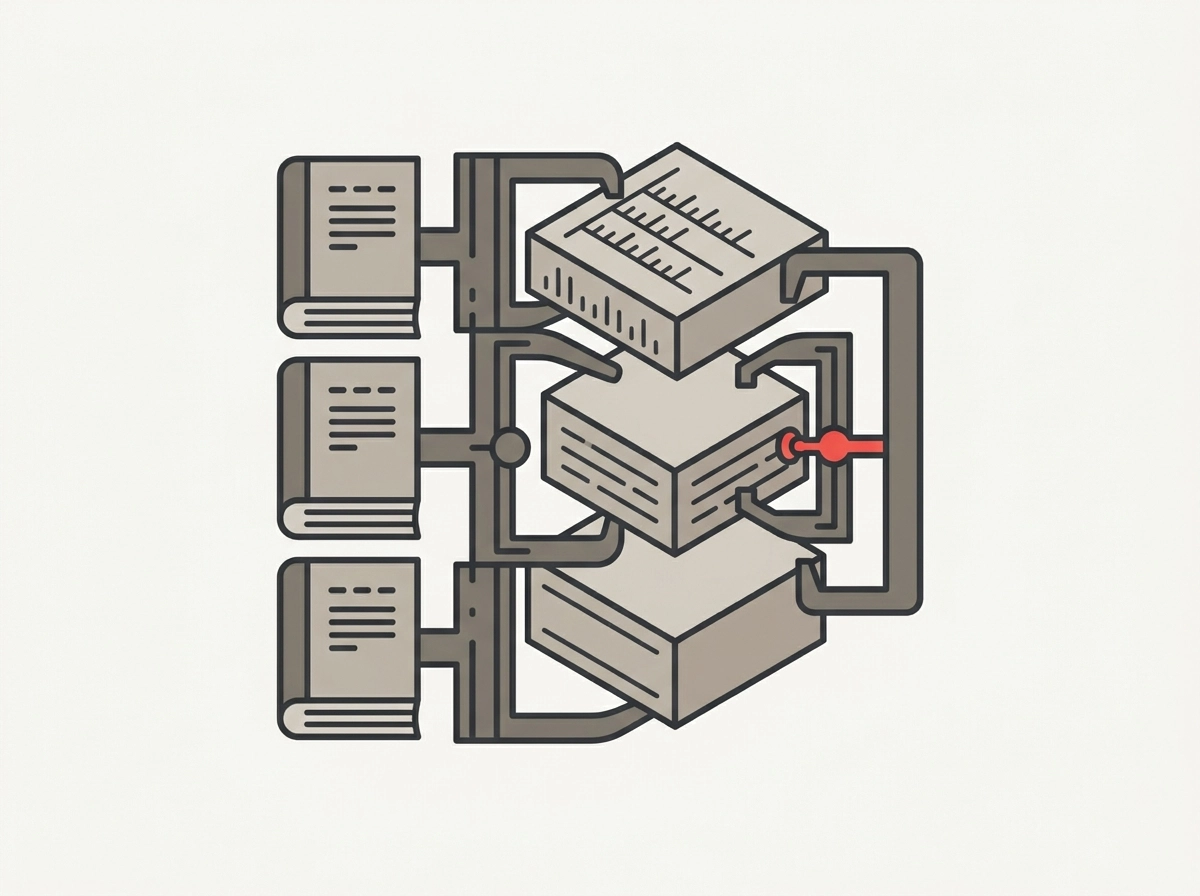
Compliance Mandates That Determine Your Deployment Architecture
For organizations operating in regulated industries, deployment architecture is not a preference expressed in a procurement document. It is a legal output derived from the specific compliance frameworks governing your data. Understanding which mandates apply, and what they require at the infrastructure layer, eliminates ambiguity from what might otherwise appear to be a technical decision.
Healthcare: HIPAA BAA Requirements at Every Inference Layer
HIPAA requires that any vendor touching Protected Health Information execute a signed Business Associate Agreement before a single byte of PHI traverses their infrastructure. This obligation is not limited to storage. It extends to the inference endpoint, any logging system capturing input/output pairs, embedding pipelines, and fine-tuning workflows that consume clinical data. A missing BAA at any single link in that chain converts every PHI-bearing request into an impermissible disclosure under HIPAA, regardless of the vendor's encryption standards or security certifications. Standard commercial API tiers from major inference providers do not include BAAs by default; healthcare organizations must verify BAA availability and scope for the specific tier, integration surface, and configuration in use before deployment. The consequences of misconfiguration are not theoretical: healthcare data breaches cost an average of $9.77 million per incident in 2024, the highest of any industry for the fourteenth consecutive year, and the HHS Office for Civil Rights has levied over $144.8 million across 152 enforcement actions.
Financial Services: Auditability at the Inference Layer
SOC 2 Type II requirements mandate that documented, auditable controls operate effectively over an extended audit period at every layer of the stack, including inference. For AI systems processing financial records, trade data, or customer PII, organizations must demonstrate that model inference logs are retained, access-controlled, and independently auditable. A SOC 2 badge without the underlying report scoped to the specific product in production use is not evidence of compliance. Standard public cloud AI APIs do not satisfy inference log retention and auditability requirements by default, making default commercial configurations structurally inadequate for financial services workloads where GLBA and OCC obligations apply simultaneously.
Government, Defense, and GDPR: Architecture as a Legal Precondition
FedRAMP High authorization requires US-sovereign infrastructure with specific personnel screening, physical security controls, and continuous monitoring regimes. Standard commercial AI API endpoints fall outside that authorization boundary entirely. Classified workloads require on-premise or air-gapped architectures that no commercial cloud provider can satisfy through any standard service offering.
For global enterprises, GDPR Article 28 requires documented Data Processing Agreements with every sub-processor in the data handling chain. Routing EU resident data through a US-hosted inference API introduces every model provider in that chain as a sub-processor requiring individual contractual controls. As the LLM deployment playbook for regulated industries in 2026 makes clear, private deployment eliminates this sub-processor chain entirely, removing a category of compliance exposure that grows proportionally with the number of vendors in the inference path.
The compliance-to-architecture mapping is deterministic. Regulated organizations should treat deployment architecture selection as a legal requirement with enforceable consequences, not an infrastructure preference subject to vendor negotiation.
Core Private AI Capabilities That Close the Execution Gap
Enterprise LLM Fine-Tuning: Behavioral Alignment at the Organizational Level
The primary lever for closing the adoption-to-impact gap is not deploying a better base model. It is adapting a model's behavior to match the specific domain, terminology, decision logic, and task patterns of a particular organization. Enterprise LLM fine-tuning accomplishes exactly that, using internal proprietary data that never leaves the private deployment environment to reshape how a model responds, prioritizes, and reasons about organizational tasks.
The structural advantage here is categorical, not incremental. A general-purpose API endpoint is optimized for breadth across every possible user query. A fine-tuned private model is optimized for depth across the specific workflows your organization runs. The performance differential on domain-specific tasks is measurable and consistent: fine-tuned models produce outputs that conform to internal terminology, apply institutional reasoning patterns, and avoid the generalized hedging that makes off-the-shelf model outputs operationally unreliable. This is the behavioral alignment that transforms AI from a research experiment into production infrastructure.
RAG as a Complementary Architecture Layer
Retrieval-Augmented Generation operates on a different mechanism and solves a different problem. Rather than reshaping model behavior at training time, RAG connects model inference to live, versioned knowledge bases at query time, grounding responses in verified organizational data with traceable source attribution. The enterprise RAG market reached $1.94 billion in 2025 and is projected to reach $9.86 billion by 2030 at a 38.4% CAGR, a growth rate that reflects how broadly this architecture is being adopted across production deployments.
The case for RAG in enterprise-safe agentic AI stacks rests on two concrete advantages. First, properly implemented RAG reduces hallucination rates by 70 to 90 percent and achieves 95 to 99 percent accuracy on queries about current, domain-specific information. Second, proprietary data never becomes part of model weights; it remains in the organization's vector store, governed by internal access controls. Private deployment enables RAG over sensitive document corpora including legal contracts, financial filings, and technical specifications that cannot and should not be indexed by external systems. The trade-off versus fine-tuning is a practical one: RAG is faster to implement and keeps knowledge current without retraining cycles; fine-tuning produces deeper behavioral alignment but requires dedicated training infrastructure. Most mature private AI deployments use both layers simultaneously, with fine-tuning handling behavioral alignment and RAG handling knowledge currency.
Massive-Context Document Analysis
Frontier models now support context windows ranging from 100,000 to over one million tokens, and this capability acquires an entirely different utility profile inside a private deployment. Applied to an entire contract portfolio, a regulatory filing archive, an engineering specification library, or a litigation document set, massive-context analysis enables the kind of comprehensive cross-document reasoning that was computationally and architecturally impossible even two years ago.
The critical constraint is data sensitivity. These document corpora contain the organization's most commercially and legally sensitive material. Routing them through public API endpoints is not simply a security concern; in regulated industries and jurisdictions with strict data residency requirements, it is frequently not a permissible option. Private deployment removes that constraint entirely, making massive-context analysis actionable at enterprise scale across the use cases where it delivers the most concentrated value.
Agentic AI: The Operational Tier That Requires Private Infrastructure
Agentic systems capable of executing multi-step tasks autonomously represent the deployment tier where private infrastructure shifts from preferred to required. MarketsandMarkets identifies agentic AI as a primary driver of enterprise AI market growth through 2033, and the Agentic RAG market alone is projected to expand from $3.8 billion in 2024 to $165 billion by 2034. The enterprise-scale information retrieval capabilities underpinning these systems are already in production at major financial and professional services organizations.
The architectural requirement is unambiguous. An agentic system operating across ERP workflows, CRM data, internal knowledge bases, or financial systems must have read and write access to those systems. Routing that operational data through external APIs is not a calculated risk; it is a structural exposure that no compliance framework permits. Private deployment is the only architecture that allows agentic systems to operate with the access breadth their utility requires while keeping all operational data within the organization's governed environment.
Rogue Fractal's infrastructure stack addresses all four of these capability layers as integrated, production-deployable infrastructure rather than assembled prototypes. From private LLM fine-tuning and massive-context document analysis to autonomous content and SEO swarms, the architecture is built to close the execution gap at the capabilities tier, not paper over it.
Self-Hosting Open-Weight Models at Enterprise Scale
The open-weight model landscape has undergone a fundamental quality shift that enterprise procurement teams can no longer afford to dismiss. Models including Llama 4 Maverick, DeepSeek V4-Pro, and Mistral's latest releases now deliver frontier-competitive performance across summarization, document analysis, code generation, and complex reasoning tasks. DeepSeek V4-Pro reached 80.6% on SWE-Bench Verified as of mid-2026, a score that would have been implausible for a downloadable model twelve months prior. Stanford HAI's 2026 AI Index confirms that US and Chinese models have reached effective performance parity on enterprise benchmarks, meaning the capability gap between self-hostable open-weight models and closed proprietary APIs has narrowed to roughly six months of differential. For the majority of enterprise workloads, Llama and DeepSeek are not compromises; they are legitimate production architectures.
The challenge is not capability. It is selection and validation. With over 239 evaluated LLM models currently available, each optimized for different use cases, licensing structures, and hardware profiles, enterprise AI buyers face a model-selection problem that no single procurement team is equipped to resolve through independent evaluation. The true value of Private AI infrastructure in this environment is not only data control; it is model discipline. Rather than navigating an undifferentiated menu of unvalidated options, organizations benefit from a curated, pre-validated stack where model selection, quantization profile, and serving configuration have already been tested against production-grade workloads. Opinionated defaults eliminate the paralysis and reduce the surface area for costly mistakes.
The Full MLOps Stack Is the Actual Deliverable
Downloading model weights is not a deployment. Production self-hosting at enterprise scale demands a complete MLOps stack that most organizations lack the internal capacity to build. The inference layer alone requires careful engineering: vLLM achieves approximately 793 tokens per second on an A100 GPU running Llama 3.1 8B, compared to roughly 41 tokens per second on Ollama, a 19x throughput gap that becomes operationally significant at enterprise concurrency levels. Beyond the inference engine, production readiness requires INT4 or INT8 quantization for memory efficiency, continuous batching, GPU and CPU routing logic, load balancing across serving instances, enforced latency SLAs, version management pipelines that do not break production on model updates, and monitoring instrumentation covering drift, throughput degradation, and hallucination rates. Building this stack from scratch is a multi-month engineering effort with no guaranteed outcome.
Unit Economics That Shift at Scale
The cost argument for self-hosting becomes structurally compelling once token volume reaches production thresholds. Current API pricing for frontier closed models sits at roughly $2.50 to $3.00 per million input tokens, with output costs reaching $15.00 per million tokens. At tens of millions of tokens processed daily, that pricing compounds into a significant recurring line item. A capable private LLM server requires $8,000 to $12,000 in entry-level hardware investment, with cost parity against cloud APIs typically reached within three to six months at 50,000 or more queries per month. For regulated industries where HIPAA, GDPR data residency, or CMMC requirements make external API transmission a compliance liability regardless of cost, self-hosting is not a financial optimization; it is the only architecturally permissible option.
Rogue Fractal's Private AI infrastructure addresses both the economics and the operational complexity through pre-validated, opinionated deployment stacks for open-weight models. These stacks eliminate the engineering guesswork that causes most enterprise self-hosting attempts to stall at proof of concept, delivering a production-grade serving environment without requiring organizations to build MLOps competency from the ground up.
What to Look for in a Private AI Infrastructure Provider
Not all providers who describe themselves as Private AI infrastructure vendors are delivering equivalent capability. Evaluating them requires a structured framework built around five non-negotiable criteria.
Deployment Spectrum Coverage
A credible Private AI infrastructure provider must be capable of operating across the full deployment spectrum: VPC-isolated cloud, on-premise bare metal, and air-gapped environments. The critical qualifier is that the provider must be capable of serving tiers they are not commercially incentivized to prioritize. A vendor whose revenue model depends on managed cloud services will consistently steer enterprise buyers toward that tier regardless of the buyer's actual compliance posture. Enterprise compliance requirements are not static; CMMC, HIPAA, GDPR, and emerging sovereign AI regulations are evolving in ways that make today's VPC deployment tomorrow's compliance liability. Infrastructure that cannot migrate between tiers without architectural rework creates compounding technical debt that grows more expensive to resolve the longer it persists.
Fine-Tuning Infrastructure, Not Just Inference
Providers offering only model inference access are delivering a managed alternative to public cloud APIs, not Private AI infrastructure. The distinction is consequential. While inference now accounts for 74% of AI compute spend in startup environments and nearly half in enterprises, inference alone produces no durable enterprise differentiation. Differentiation emerges from models that have been adapted to proprietary data, internal terminology, domain-specific reasoning patterns, and organizational behavioral standards. A legitimate Private AI infrastructure provider must support the full adaptation stack: parameter-efficient fine-tuning methods such as LoRA, full fine-tune pipelines for sufficiently resourced organizations, and continuous update mechanisms as proprietary data evolves. Providers without this capability are positioned for pilots, not production.
Massive-Context and Document Analysis at Production Latency
As frontier models scale toward 1M+ token context windows, the infrastructure question shifts from model selection to hardware and orchestration. Routing large document corpora through private inference at production latency requires GPU memory architecture, efficient inference serving frameworks, and batching logic that most standard deployments do not configure by default. This is not a problem that can be solved by choosing a better model.
Agentic System Support and Transparent Cost Modeling
Agentic AI, where systems plan, execute tool calls, and self-correct across multi-step workflows, is the fastest-growing enterprise use case and demands infrastructure that handles chained model calls natively. Providers requiring custom integration for every agentic workflow impose friction that compounds at scale. Equally important is cost transparency. Given that cost escalation drove the abandonment of more than half of enterprise GenAI pilots, any provider unable to model unit economics at production token volumes before contract execution is optimized for sales cycles, not production outcomes.
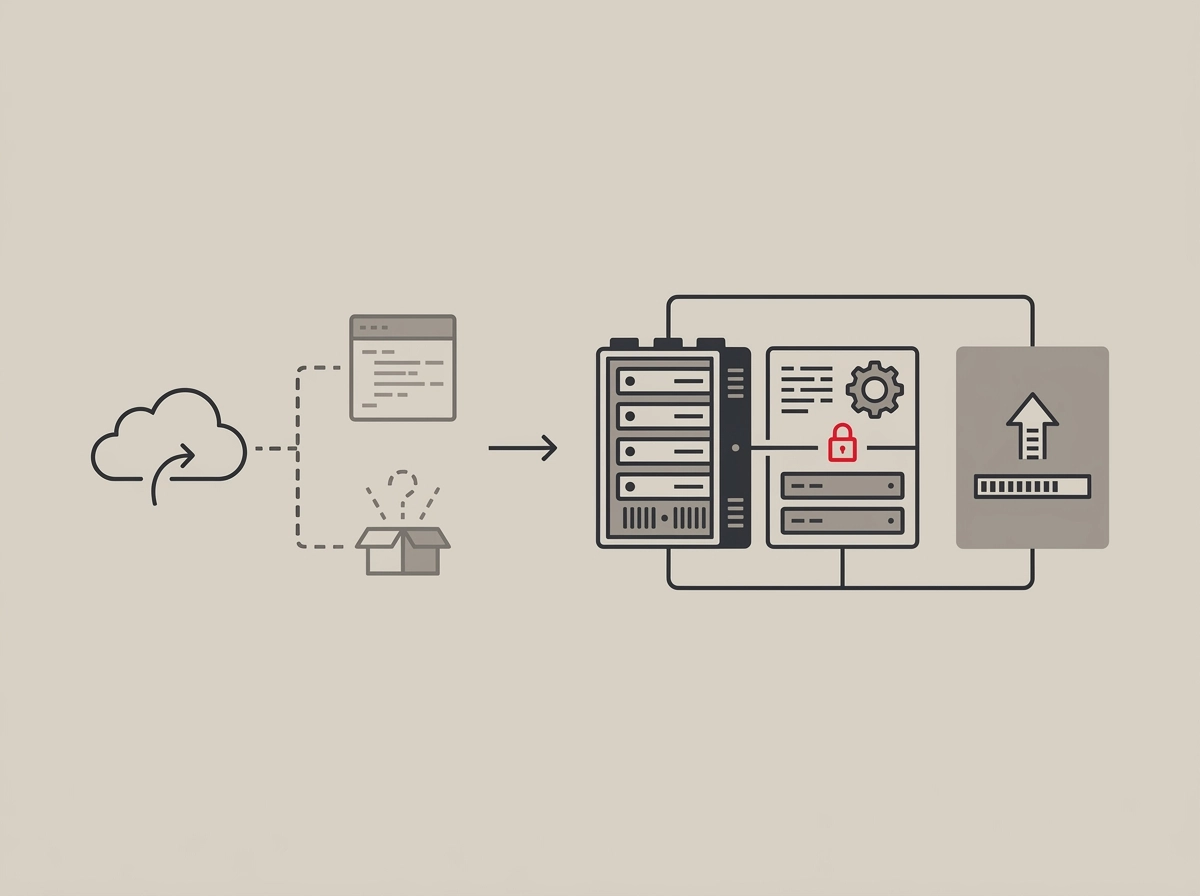
Private AI Is Not a Privacy Feature. It Is an Infrastructure Strategy.
The adoption-to-impact gap will not close through better prompt engineering or a different API subscription. It closes when enterprises make a deliberate architectural commitment: moving from public cloud AI experimentation to production-grade Private AI infrastructure built on fine-tuned models, controlled data pipelines, and deployment architectures that reflect regulatory and operational reality. Every section of this analysis has pointed toward the same structural conclusion. The infrastructure decision precedes the capability decision. Organizations that invert that sequence accumulate pilots without production, and adoption statistics without business impact.
Three actionable decisions follow from this analysis. First, audit your current AI deployment against the five-tier spectrum and identify precisely where data sensitivity or compliance mandates require a private architecture tier. The spectrum runs from public API access through VPC-isolated deployment to fully air-gapped on-premise infrastructure; most enterprises are operating in tier one or two while carrying tier four or five compliance obligations. Second, map your specific regulatory framework, whether HIPAA, SOC 2, FedRAMP, or GDPR, to the minimum viable deployment architecture before selecting any infrastructure or vendor. Architecture derived from compliance requirements is durable; compliance retrofitted onto a pre-selected architecture is perpetually at risk. Third, model unit economics at your actual production token volume before committing to per-token API pricing. At 50,000 or more queries per month, private deployment reaches cost parity with cloud APIs within three to six months, and that calculation does not yet include compliance risk remediation costs.
Rogue Fractal builds Private AI infrastructure for enterprises that have completed their pilots and now require production. The engagement scope covers fine-tuning on proprietary data, massive-context document analysis, autonomous workflow deployment, and the full open-weight model stack, delivered as production infrastructure rather than experimental configuration.