Why professional offices are moving AI inside their walls
Privileged files, regulated workflows, and client confidentiality are pushing law, medical, and finance teams toward models that never leave the building.
For most of the last decade, the default answer to "we want AI" was "call an API." That trade made sense when the models were experimental. It stops making sense the moment the data is privileged.
The tradeoff that changed
Public APIs are shared. They are fast to start and slow to trust. For an office handling case files, patient administration, or client financials, every document sent to a shared endpoint becomes a question a compliance advisor will ask about.
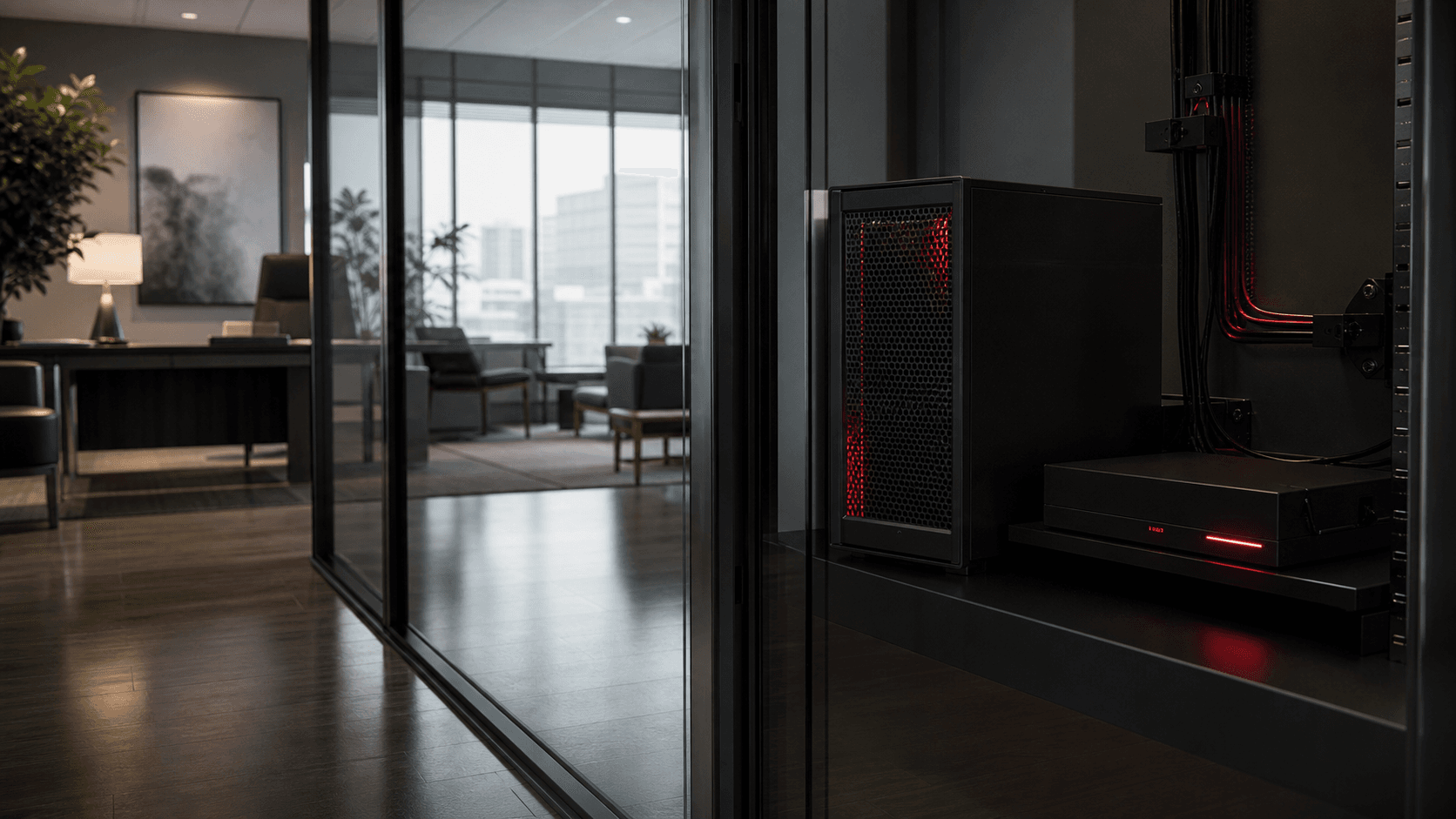
Private deployments invert the tradeoff. The hardware sits inside the environment, the model is adapted to the office's own documents and style, and the operating cost becomes a managed line item instead of a usage-based surprise.
What changes day to day
- Confidential work product stays inside the perimeter.
- Models learn the firm's templates, terminology, and standards.
- Search across tens of thousands of internal documents becomes near-instant.
Local AI is not about owning GPUs. It is about removing a question from the compliance conversation.
The rest of the engineering — installation, model lifecycle, monitoring, onboarding — is exactly the kind of operational work RogueFractal is built to run.
Put it into practice
Have a system that needs this?
Tell us what you are building, improving, or deploying. We review every brief and reply within one business day.