
Something significant is happening in enterprise technology. Organizations that once rushed to migrate everything to the cloud are quietly reversing course, investing instead in dedicated on-premises infrastructure to handle their most sensitive AI workloads. This shift is not a rejection of innovation; it is a calculated response to the real costs and risks that come with relying on third-party cloud providers for artificial intelligence operations.
The case for a private AI server has never been stronger. As AI becomes deeply embedded in core business functions, the questions of data sovereignty, latency, compliance, and long-term cost efficiency have moved from technical discussions to boardroom priorities. Organizations across healthcare, finance, legal, and government sectors are discovering that what looks like convenience in the cloud often translates to compounding expenses, regulatory exposure, and performance bottlenecks at scale.
In this analysis, we will break down the financial, operational, and strategic reasons why organizations are making this transition. You will walk away with a clear understanding of what is driving this movement and how to evaluate whether a private AI infrastructure makes sense for your own organization.
The Trust Collapse That Is Forcing the Conversation
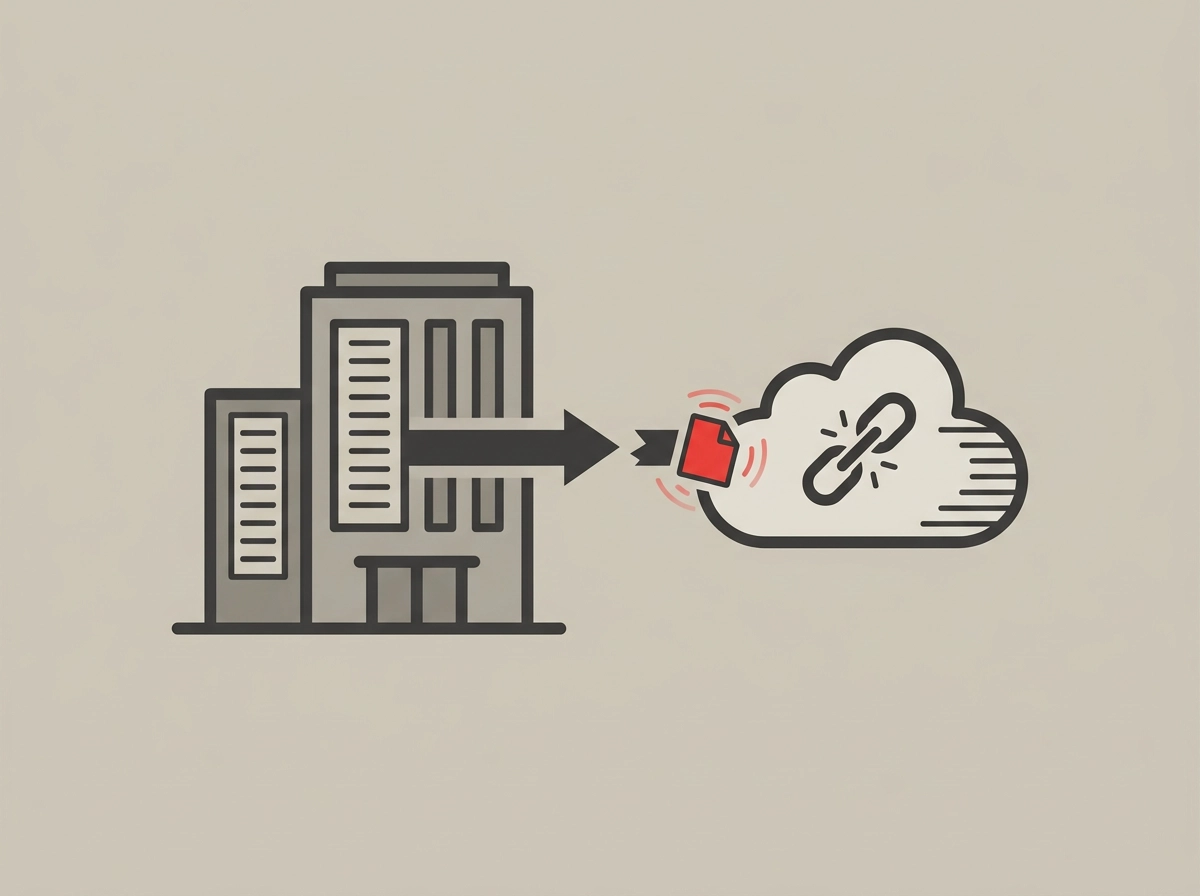
The relationship between enterprises and public AI APIs is undergoing a fundamental stress fracture, and the pressure points are no longer abstract. When an organization sends a prompt to a public LLM endpoint, that data leaves the enterprise perimeter entirely. It travels to vendor servers, gets processed within infrastructure the organization does not own, and is retained in inference logs that the organization cannot audit, query, or delete on demand. The more accurate concern is not transmission security but data custody after receipt: who holds the logs, under what retention policy, and with what training use provisions baked into the terms of service. Most enterprise legal teams, when they examine those terms carefully, find the answer deeply unsatisfying.
The operational risks materialized in concrete form in early 2026, when a major AI provider quietly reduced default compute allocation for enterprise customers without issuing any notification. Production workloads degraded in quality and throughput with no SLA mechanism available to affected organizations. There was no recourse, no remediation timeline, and no contractual obligation to restore prior performance levels. That single event crystallized what many infrastructure leaders had suspected: public API dependency creates an asymmetric risk posture where the vendor controls the variables and the enterprise absorbs the consequences.
The data confirms the trust deficit is widespread. Forty-four percent of enterprises deploying generative AI still cite data privacy and security as their single largest barrier to full adoption, even as 80% are projected to have deployed some form of generative AI by end of 2026. Meanwhile, AI inference attacks are now a recognized and active enterprise security category, with the inference layer itself identified as an exposure surface, not just the perimeter around it. Prompt histories, proprietary context, and competitive intelligence embedded in queries compound into a systematic data leak with every call at scale.
The framing driving boardroom conversations has shifted decisively. The question is no longer whether a private AI server is theoretically more secure. Public API dependency is now a documented, named business risk, evaluated alongside vendor concentration risk and third-party data handling in enterprise risk registers. That reframing is moving private AI infrastructure decisions upstream from IT procurement into C-suite infrastructure strategy.
Four Reasons Enterprises Are Pulling Workloads Off Shared Infrastructure
The migration away from shared inference infrastructure is not a trend driven by preference. It is being forced by four converging structural pressures, each capable of independently justifying the move, and each amplifying the severity of the others.
Compliance Risk Is Not Negotiable
Regulated industries operate under a fundamental constraint: client data, protected health information, controlled unclassified information, and attorney-client privileged material cannot legally transit a third-party inference endpoint. HIPAA's minimum necessary standard and its prohibitions under §164.502 apply regardless of whether transmission is intentional. CMMC Level 2 and Level 3 controls under NIST 800-171 require that CUI remain within organizationally controlled systems. GDPR Article 28 imposes processor obligations that most shared API providers cannot satisfy contractually. For defense contractors, healthcare systems, law firms, and financial institutions, the enterprise LLM deployment architecture must begin with data residency as a hard constraint, not an afterthought.
Token Pricing Breaks at Volume
Token-based API pricing appears manageable at low query volumes and becomes structurally untenable at scale. Organizations running 50,000 or more queries per month face a cost curve that accelerates faster than budget models anticipate, particularly when factoring in egress costs, context window sizes for RAG pipelines, and the compounding effect of agentic workflows that chain multiple inference calls per task. Dedicated private AI infrastructure, with hardware entry points between $8,000 and $12,000, reaches cost parity within three to six months at these volumes.
Throughput Ceilings Kill Production Workflows
Shared cloud inference introduces rate limits and queue times that are architecturally incompatible with real-time applications. Autonomous agent pipelines are particularly vulnerable; a multi-step workflow that chains five inference calls multiplies latency at every node. The enterprise AI infrastructure market now segments dedicated inference capacity as a distinct requirement, separate from general cloud compute, precisely because throughput predictability cannot be guaranteed on shared endpoints.
Fine-Tuning Requires Stack Ownership
Organizations that need models calibrated to proprietary knowledge, domain-specific vocabulary, or regulated output formats cannot achieve that through a closed third-party API. Fine-tuning a 70B parameter model requires direct hardware access, specifically configurations such as eight H100 80GB GPUs for full fine-tuning, as noted in current private AI infrastructure guidance. Auditability compounds this requirement; compliance teams need complete request and response logs, model version pinning, and data lineage records that shared endpoints structurally cannot provide.
These four drivers do not resolve independently. The organization that starts with a compliance objection quickly discovers it also faces cost unpredictability, throughput limits, and an inability to customize its model. The organization that starts with a cost objection finds it cannot audit or adapt the infrastructure it now depends on. Private AI server deployment resolves all four simultaneously, which is precisely why the conversation has moved from IT procurement to boardroom infrastructure strategy.
The Hardware Reality: Private AI Is Now Accessible to Mid-Market Firms
The financial barrier that once confined private AI server deployments to Fortune 500 infrastructure budgets has effectively collapsed. Entry-level hardware capable of serving production LLM workloads now starts at $8,000 to $12,000, with a more conservative estimate for most mid-sized business deployments landing between $10,000 and $15,000. For growth-stage companies accustomed to evaluating software investments in monthly SaaS terms, these figures represent a one-time capital expenditure that eliminates recurring per-token costs entirely. The hardware conversation has shifted from "can we afford this" to "how quickly does this pay for itself," and the answer is compressing faster than most CFOs anticipate.
The Financial Case Is Now Undeniable
At query volumes exceeding 50,000 per month, cost parity with cloud API pricing is reached within 3 to 6 months of on-premise deployment. Documented ROI windows as short as 4 months have been reported for production on-premise LLM environments, according to on-premise LLM deployment analysis. To frame this concretely: a professional services firm running 60,000 queries monthly through a cloud API might spend $500 to $2,000 per month, totaling up to $24,000 annually. That annual spend exceeds the full hardware acquisition cost of a capable private server, which then operates at marginal power cost for its entire remaining service life. Some organizations have reported cutting LLM infrastructure costs by up to 90% after transitioning to self-hosted infrastructure. The CFO objection threshold has not just lowered; for high-volume operators, it has essentially inverted.
Capability Parity Has Removed the Performance Trade-Off
The argument that private deployment requires sacrificing model quality no longer holds. Open-source models including Llama 3.3 70B and Qwen 2.5 72B now rival frontier closed-model performance across the business tasks that matter most: summarization, document analysis, and code generation. A comprehensive private LLM deployment guide for enterprises confirms this capability convergence is production-validated across regulated industries. The performance gap that previously forced organizations to choose between data control and output quality has closed. Private deployment is no longer a compromise position.
A Foundational Infrastructure Category, Not a Niche Decision
The generative AI server market is projected to reach $1,885.25 billion by 2035, a figure that reframes the private AI server decision entirely. Organizations evaluating a private AI server investment today are not making a departmental IT procurement call; they are staking an early position in what is becoming a foundational enterprise infrastructure category, comparable in strategic weight to the data center and cloud transitions that preceded it. The buyer population has broadened dramatically as a result. Mid-market operators and growth-stage companies are now the active edge of adoption, not the lagging tail, and firms like Rogue Fractal are purpose-built to meet that expanding market exactly where it is.
Regulatory Pressure Is Compressing Enterprise Decision Timelines
The regulatory environment surrounding enterprise AI has shifted from a background consideration to an active enforcement reality. The EU AI Act entered full enforcement on August 2, 2026, completing a phased rollout that began with prohibited practice restrictions in February 2025 and escalated through general-purpose model obligations in August 2025. The third and most operationally demanding wave now covers high-risk AI system requirements under Articles 9 through 17, and organizations that have been waiting for clarity have run out of runway. Maximum fines for the most serious violations reach 7% of global annual revenue, applied per violation, meaning an enterprise running multiple non-compliant AI workloads faces compounding exposure that scales directly with revenue. Critically, the regulation mirrors GDPR's extraterritorial reach: any organization whose AI systems affect EU persons falls under its jurisdiction, regardless of where that organization is headquartered. A US-based firm processing EU personnel records, patient data, or customer interactions through a public API inference pipeline is already in scope.

What makes the current moment particularly acute is that the EU AI Act is not arriving into a compliance vacuum. HIPAA, CMMC/NIST 800-171, and GDPR were already generating private deployment obligations across healthcare, defense, legal, and financial services well before 2026. The Cloud Security Alliance's enterprise readiness research documents that over half of organizations currently lack systematic AI inventories, meaning they cannot identify which of their deployed systems qualify as high-risk under Annex III. These organizations are carrying unquantified regulatory exposure on every active AI workload running today. The harmonized technical standards that were supposed to guide compliance implementation arrived eight months late, compressing implementation timelines further for organizations that waited for official guidance before acting.
The architectural implication that regulators are increasingly demanding is not subtle. As Ultraviolet's AI governance framework articulates directly: contractual representations to a cloud vendor do not constitute a technical control. Auditors and regulators are requiring demonstrable, infrastructure-layer evidence of where data was processed, who had access, and how outputs were logged. A data processing agreement with a public API provider cannot produce that evidence because the organization does not own the infrastructure generating it.
For defense and intelligence environments, this analysis does not even apply, because the question is not how to satisfy compliance requirements through architecture. Air-gap mandates make cloud-based inference architecturally impossible. Connectivity to an external inference endpoint is structurally incompatible with classified and sensitive compartmented environments. Private AI server deployment is not the preferred option in those contexts; it is the only viable option.
The risk calculus that previously treated private deployment as the more complex and therefore riskier path has inverted completely. Organizations considering whether they can afford to build private AI infrastructure should be asking whether they can afford the exposure of not doing so. The A-LIGN enforcement delay analysis confirms that despite a November 2025 Digital Omnibus proposal suggesting a potential extension, major law firms advise treating August 2, 2026 as the binding operative deadline. Compliance is no longer a reason to delay private AI deployment; it is increasingly the reason organizations cannot continue relying on public API infrastructure at all.
What Happens After the Server Is Running: The Intelligence Layer Above Hardware
Infrastructure vendors and hardware-only providers have thoroughly mapped the path to a running private AI server. GPU specifications, cooling requirements, network topology, compliance certifications: the deployment checklist is well-documented. What none of them address is the more consequential question of what the running server actually enables. The hardware is not the product. It is the prerequisite. The intelligence layer built on top of it is where durable competitive advantage is constructed, and that layer remains entirely unaddressed by every vendor selling the box.
The Fine-Tuning Flywheel That Closed APIs Prevent by Design
The most structurally significant capability unlocked by private deployment is the compounding fine-tuning loop. Proprietary data trains a better model; that better model produces higher-quality outputs; those outputs generate additional proprietary data that feeds the next training cycle. The loop compounds over time into a data moat that competitors using shared APIs cannot replicate. This is not a marginal improvement, it is a fundamentally different trajectory. On closed third-party models, this loop is structurally impossible: the training signal, the fine-tuning feedback, and the inference outputs all accrue to the model vendor, not to the enterprise. McKinsey data reflects the boardroom-level awareness of this dynamic, with 71% of executives now identifying sovereign AI as an existential concern or strategic imperative, recognizing that proprietary data moats are built on infrastructure an organization controls outright.
Massive-Context Inference and the Capability Gap
Private deployment also unlocks a specific technical capability that receives almost no coverage in infrastructure vendor materials: massive-context inference over proprietary knowledge bases. Running an entire legal document corpus, a multi-year contract library, a complete codebase, or a dense internal knowledge repository through a very large context window requires that none of that data leave the organization's environment. On shared cloud infrastructure, this creates data egress exposure and context window pricing constraints that make the capability operationally unviable at scale. On a private server, the constraint disappears entirely. The organization's full knowledge surface becomes queryable without compromise.
Production Velocity for Autonomous Agent Pipelines
Autonomous agent systems, including content generation engines, autonomous SEO pipelines, and agentic swarms executing multi-step workflows across internal tools and external surfaces, require inference characteristics that shared infrastructure cannot reliably deliver. Rate limits, variable latency under load, and per-token cost economics at scale all create bottlenecks that degrade agentic performance precisely when throughput demands are highest. The 2026 State of AI Agents report, drawing on usage data from 20,000+ global organizations, confirms that production agent deployment is happening at enterprise scale now. Production velocity requires dedicated infrastructure. Private servers are the prerequisite, not an alternative option.
The Unified Approach: Infrastructure and Intelligence as One System
Rogue Fractal occupies the specific position that hardware-only vendors leave entirely vacant. Private AI server infrastructure is the foundation, but the intelligence layer built on it, including enterprise LLM fine-tuning, autonomous SEO and content engines, and localized autonomous agent swarms, is the operational output that drives measurable growth outcomes. The fine-tuning loop compounds proprietary advantage. The massive-context capability surfaces organizational knowledge at scale. The agentic pipelines execute at production velocity. No hardware vendor is building this layer. That gap is precisely where the competitive differentiation for growth-focused organizations is now being established.
Private AI for Growth Teams, Not Just Compliance Teams
Every published guide on private AI deployment in 2026 addresses the same buyer: the CISO, the compliance officer, the healthcare IT director navigating HIPAA requirements. The framing is consistent across the entire content landscape, and it systematically excludes a buyer with equally urgent economics and far greater strategic upside. Growth teams, revenue operations functions, and scaling marketing organizations face the same structural problems as regulated-industry buyers, but they lack the compliance forcing function that makes the infrastructure investment obvious. That gap in framing represents both a missed opportunity in the market and a strategic blind spot for growth-focused companies evaluating their own AI infrastructure decisions.
For a growth team, a private AI server is not a security appliance. It is the foundation of a content velocity engine, an autonomous SEO pipeline that runs continuously without rate limits or provider-imposed throttling, and a fine-tuning environment where proprietary brand voice, customer language patterns, and domain knowledge compound into a model that improves with every production workload. When enterprise API spend hit $8.4 billion in 2025 and inference costs overtook training as the dominant AI budget line item, the economics became a growth problem just as much as a compliance problem. A marketing organization running multi-channel campaign production, automated outreach sequences, and high-volume SEO content generation faces the same unpredictable per-token billing as any hospital system, with the added dimension that output velocity is directly tied to competitive position.
The break-even math is already favorable at realistic growth team usage levels. At volumes above 50,000 queries per month, an entry-level private AI server reaching cost parity with cloud APIs within 3 to 6 months is not a hypothetical for a 100-person company running serious content operations. A scaling company between 50 and 500 employees that deploys private AI for growth accumulates a structural advantage that compounds over time: lower marginal cost per output, faster iteration cycles, and a proprietary model that gets sharper with every production run. Competitors still paying per-token to third-party providers produce no such durable asset. Every query they send enriches a provider's inference logs; every query run on owned infrastructure enriches the organization's own model.
The throughput ceiling problem is almost entirely absent from existing industry content, yet it is one of the most direct constraints on growth team performance. API rate limits create a hard ceiling on output velocity. No amount of prompt engineering or workflow optimization overcomes a provider-imposed throttle on a high-frequency content pipeline. Running inference on owned infrastructure, using runtimes that give full control over model version, latency, and throughput, removes that ceiling entirely. The competitive advantage for a growth-focused organization is not just cost; it is the ability to operate at a pace that third-party infrastructure constraints make structurally impossible for competitors still dependent on shared APIs.
Evaluating a private AI server through a compliance-only lens systematically undervalues what the infrastructure actually does for a revenue organization. It is not a risk mitigation tool for the IT team. It is the engine layer beneath every high-volume growth workflow the organization runs, and the organizations treating it that way are building a structural moat that per-token competitors cannot close by simply upgrading their prompts.
The AI Factory Paradigm: From IT Procurement to Boardroom Infrastructure Strategy
The conversation around private AI server infrastructure has migrated decisively from server rooms to boardrooms, and the clearest signal is the language being used to describe it. Equinix and NVIDIA are jointly promoting the "AI Factory" concept, framing dedicated private inference environments not as an IT procurement decision but as a capital allocation strategy with its own investment thesis, lifecycle economics, and competitive rationale. NVIDIA made its case to a boardroom-facing audience through a paid program in The Wall Street Journal, building a financial argument around long-term AI lifecycle cost control and data sovereignty. That choice of publication is itself instructive: the intended reader is not a systems administrator, it is a CFO or CEO weighing infrastructure ownership against perpetual cloud rental.
The AI Factory framing matters beyond marketing terminology because it marks the maturation of private AI server infrastructure into a recognized enterprise category. A multi-vendor ecosystem has formed around the concept, spanning GPU compute, storage orchestration, networking, and software management layers. What was once a niche preference for security-conscious IT teams now has a growing vendor ecosystem around NVIDIA's infrastructure platform, a dedicated strategic audience in executive leadership, and a documented return profile that shortens CFO objection timelines considerably.
The architectural implications of this framing are significant for organizations planning deployments. Treating a private AI server as a purpose-built inference environment, rather than a one-off hardware purchase, creates the foundational conditions for running multiple model versions simultaneously, managing iterative fine-tuning pipelines against proprietary data, and scaling inference throughput without rebuilding the underlying architecture each time requirements grow. The organizations that approach deployment as factory infrastructure rather than a point solution are positioning for compounding returns rather than one-time cost savings.
The sovereign AI category label reinforces this reorientation. As terminology consolidates around sovereign AI, private inference, and local LLM deployment, the underlying signal is a genuine shift in how organizations conceptualize their relationship to AI capability: as an owned strategic asset rather than a rented commodity utility.
For growth-focused organizations, the manufacturing analogy carries particular weight. A production facility compounds output efficiency through owned tooling, refined processes, and accumulated operational knowledge. A private AI inference environment compounds intelligence through proprietary training data, iterative model improvement, and fine-tuning pipelines that encode organizational knowledge no external provider can replicate. The AI Factory is not simply a cost-control mechanism; it is the infrastructure substrate for building a durable, organization-specific intelligence advantage that widens over time.
Why Private AI Becomes More Valuable Over Time
The economics of public API usage contain a structural asymmetry that most organizations never examine. Every query routed through a third-party inference endpoint generates signal that benefits the vendor's model improvement pipeline. Every query processed on a private AI server, by contrast, remains entirely within organizational boundaries and can be captured as training data for the model your organization controls. The difference is not marginal. At scale, it represents the divergence between renting intelligence from a vendor and building a proprietary intelligence asset that appreciates over time.
The Recursive Compounding Loop
The strategic core of private deployment is a self-reinforcing cycle that public API usage structurally cannot produce. Proprietary data fed into a fine-tuning process produces a domain-specialized model. That model generates higher-quality outputs calibrated to organizational context. Those outputs, in turn, produce richer organizational data: more precise customer interactions, more accurate internal documents, more refined workflows. The next fine-tuning cycle starts from a stronger baseline. With each iteration, the gap between this organization's AI capability and the commodity output available to any API subscriber widens. This is not a theoretical dynamic. A B2B SaaS organization that fine-tuned on proprietary support data saw first-contact resolution rates improve dramatically on complex queries, where a generic model had previously generated a 40% escalation rate to human agents. The compounding loop is what made that outcome durable rather than a one-time configuration improvement.
The Moat That Competitors Cannot Purchase
As general-purpose model capabilities converge, the differentiator is shifting from model size to training data ownership. Organizations that begin fine-tuning early accumulate a proprietary model moat built from something no external vendor can access: their own organizational knowledge, customer interaction history, and domain-specific corpus. Competitors cannot replicate this moat by subscribing to a more powerful API tier, because the moat is not constructed from model capability alone. It is constructed from data that only exists inside one organization.
Massive-context use cases make this advantage structurally unreplicable. A private model trained on an organization's complete contract library, internal codebase, or document archive develops institutional memory that a shared inference model literally cannot develop, regardless of its general benchmark performance. The depth of context available through full fine-tuning on a complete internal corpus exceeds what any closed API fine-tuning interface permits.
Why the ROI Calculation Changes Over Time
The 4-month cost parity window documented for on-premise LLM deployment at volumes above 50,000 queries per month represents the floor of the ROI argument, not the ceiling. Cost savings compound linearly. Proprietary model advantage compounds exponentially, because each fine-tuning cycle produces a better model that generates better data for the next cycle. Organizations evaluating private AI server deployment strictly on hardware cost recovery are measuring the least important dimension of the return. The organizations beginning that compounding cycle now will hold a model capability lead in 24 months that late movers will find structurally difficult to close.
Making the Decision: What Growth-Focused Organizations Should Do Now
The first concrete action is financial: pull your API billing dashboard today and calculate your monthly query volume against the 50,000-query threshold. Organizations exceeding that volume are already within the 3 to 6 month cost parity window where private deployment hardware, starting at $8,000 to $12,000, pays for itself against ongoing API spend. If your current volume sits below that threshold, project forward 90 days using your growth trajectory. Most organizations crossing that line are already past parity before they realize it, and every month of delay represents capital transferred to a vendor rather than converted into owned infrastructure.
The second action is a regulatory audit, and for many organizations operating in healthcare, defense, finance, or any sector touching EU persons, this audit may remove optionality entirely. Map every active AI workload against HIPAA, CMMC, GDPR, and EU AI Act requirements. The EU AI Act entered full enforcement in August 2026, with penalties reaching 7% of global annual turnover for GPAI model violations. Eight Annex III sectors are presumptively high-risk, and over half of organizations currently lack the systematic AI inventories required to even determine their exposure. Compliance obligations in regulated industries do not produce a recommendation to consider private deployment; they produce a legal requirement for it.
The third action reframes the evaluation from defensive to offensive. Identify the highest-volume, highest-value workflows in your organization where a proprietary fine-tuned model would compound output quality over time: document analysis, domain-specific research, customer interaction, and specialized content production are the categories where generic shared APIs structurally underperform. The compounding advantage of proprietary training data begins accumulating from the first production query, and infrastructure designed without fine-tuning pipelines from day one cannot recover that signal retroactively. Delays are permanently irreversible, not merely inconvenient.
Rogue Fractal builds private AI server infrastructure combined with autonomous growth systems, including enterprise LLM fine-tuning, autonomous SEO and content engines, and agentic swarms, for organizations that want to own not just the hardware but the intelligence layer operating above it.
Conclusion
The move toward private AI infrastructure is not a trend; it is a strategic realignment driven by real business needs. Organizations that prioritize data sovereignty, reduce long-term cloud spending, meet strict compliance requirements, and eliminate latency bottlenecks are gaining a measurable competitive edge. The math is clear: at scale, ownership outperforms subscription, and control outperforms convenience.
If your organization is running AI workloads today or planning to expand them, now is the time to evaluate whether the cloud is truly serving your interests or simply your vendor's bottom line.
Start by auditing your current AI infrastructure costs, compliance exposure, and performance gaps. Then explore what a dedicated private AI server solution could unlock for your operations. The organizations building this foundation today will be the ones setting the pace tomorrow.